In any workshop, proper ventilation and air circulation are crucial for maintaining a safe and productive environment. One of the most effective tools for achieving this is a belt-driven shop fan. However, with so many options available, selecting the right one can be a daunting task. This article will guide you through the process of choosing the ideal belt-driven shop fan for your workshop, providing you with valuable insights, examples, and best practices along the way.
Understanding Belt Driven Shop Fans
Belt-driven shop fans are designed to move significant volumes of air at relatively low speeds, making them ideal for large spaces like workshops. Unlike direct-drive fans, belt-driven models use a belt and pulley system to connect the motor to the fan blade, allowing for greater flexibility in fan speed and airflow control.
The Advantages of Belt Driven Fans

Choosing a belt-driven fan comes with several advantages:
- Efficiency: Belt-driven fans can be more energy-efficient than their direct-drive counterparts, especially in larger spaces.
- Noise Reduction: These fans tend to operate more quietly due to the motor being isolated from the fan blade.
- Longer Lifespan: The design allows for easier maintenance and replacement of components, contributing to a longer lifespan.
- Variable Speed Options: Many belt-driven fans come with adjustable speed settings, allowing for customized airflow based on specific needs.
Key Factors to Consider When Choosing a Belt Driven Shop Fan

When selecting the right belt-driven shop fan for your workshop, several factors should be taken into account:
1. Size of the Workshop
The size of your workshop is perhaps the most critical factor in determining the fan’s specifications. Here’s how to assess your needs:
- Small Workshops (up to 500 sq. ft.): A fan with a blade diameter of 24-30 inches is typically sufficient.
- Medium Workshops (500-1500 sq. ft.): Consider a fan with a blade diameter of 30-36 inches.
- Large Workshops (1500 sq. ft. and above): A fan with a diameter of 36-48 inches or larger may be necessary.
2. Airflow Requirements

The airflow of a fan is measured in cubic feet per minute (CFM). Different tasks will require different CFM ratings:
- Light Work: For basic ventilation needs, aim for fans with a CFM rating of 2,000-4,000.
- Moderate Work: If your workshop involves sanding or painting, look for fans with 4,000-8,000 CFM.
- Heavy Work: For welding or other high-emission tasks, consider fans with 8,000 CFM or more.
3. Noise Levels
Noise can be a significant concern in a workshop environment. When evaluating potential fans, consider the following:
- Check the decibel (dB) rating provided by the manufacturer.
- Look for models that feature sound-dampening technology.
- Consider where you will place the fan; positioning it strategically can reduce perceived noise.
4. Power Supply
Belt-driven fans come in various power options, including electric and gas. Consider the following:
- Electric Fans: Generally more efficient and easier to maintain; ideal for indoor use.
- Gas-Powered Fans: Suitable for outdoor workshops or areas without electrical access but can be noisier and require more maintenance.
5. Portability and Mounting Options

Think about how you plan to use the fan:
- Portable Fans: If you need to move the fan around, look for models with wheels or lightweight designs.
- Fixed Fans: If the fan will remain in one location, consider wall-mounted or ceiling-mounted options.
Examples and Case Studies

To better understand how these factors play out in real-world scenarios, let’s examine a few case studies:
Case Study 1: Small Workshop Owner
John runs a small woodworking shop (400 sq. ft.) and needs a fan for basic ventilation. He opts for a 30-inch belt-driven fan with a CFM rating of 3,500. The fan operates at a quiet 62 dB, minimizing noise disruption during work hours. This choice effectively circulates air without overwhelming the space.
Case Study 2: Medium Automotive Workshop
Susan operates an automotive repair shop (1,200 sq. ft.) and frequently deals with paint and exhaust fumes. She selects a 36-inch belt-driven fan with a CFM of 6,500. The fan features adjustable speed settings, allowing her to increase airflow during high-emission tasks, ensuring a safer working environment.
Case Study 3: Large Industrial Workshop
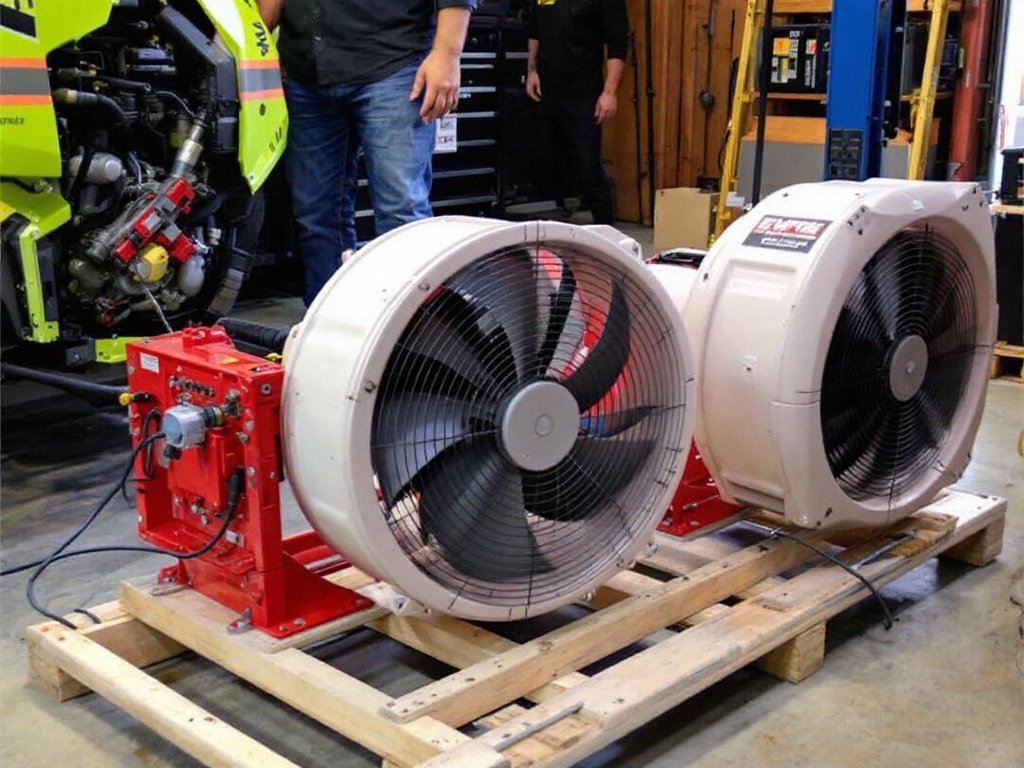
Bob manages a large manufacturing facility (3,000 sq. ft.) and requires robust ventilation. He invests in multiple 48-inch belt-driven fans, each rated at 10,000 CFM. With these fans strategically placed, he achieves excellent airflow throughout the workshop, significantly reducing heat and fume buildup, which has resulted in increased productivity.
Maintenance Tips for Belt Driven Shop Fans
To ensure the longevity and efficiency of your belt-driven fan, regular maintenance is essential. Consider these tips:
- Regularly Clean the Fan Blades: Dust and debris can accumulate, reducing efficiency.
- Inspect the Belt: Check for wear and tear, and replace if necessary to avoid costly breakdowns.
- Lubricate Moving Parts: Routine lubrication can help reduce friction and noise.
- Check Electrical Connections: Ensure all connections are secure to prevent electrical issues.
Choosing the right belt-driven shop fan for your workshop is a critical decision that can significantly impact your workspace’s comfort and safety. By considering factors such as workshop size, airflow requirements, noise levels, power supply, and portability, you can make an informed choice tailored to your specific needs. Real-world examples illustrate how different setups can lead to enhanced productivity and improved air quality. Remember to maintain your fan regularly to ensure its longevity and efficiency. With the right fan in place, your workshop can become a more pleasant and productive environment.